
Oud is the most misunderstood word in Pakistani perfumery. It is used to sell everything from Rs. 500 oils to Rs. 50,000 vials — and most buyers can't tell which is real. This guide fixes that: what oud actually is, why Hindi and Cambodi smell like different planets, and how to buy the real thing without getting burned.
What Oud Actually Is
Oud (also called agarwood or dehn al oud) is not a flower or a spice. It is the dark, fragrant resin that forms inside aquilaria trees when they fight off infection — a defence mechanism that takes decades. The oil is steam-distilled from this resinous wood, drop by precious drop. That scarcity is the entire reason genuine oud perfume in Pakistan commands serious prices: you cannot rush a tree.
Hindi vs. Cambodi: The Two Great Styles
Region changes everything. Think of it like tea — same plant family, wildly different cups.
- Hindi oud (from Assam, India) is bold, animalic and leathery — barnyard opening that melts into deep, smoky warmth. It is the oud of winter weddings and formal evenings, the one that announces presence. This is what we chose for our own Royal Dehn al Oud: unapologetic and unforgettable.
- Cambodi oud (from Cambodia/Thailand) is softer, sweeter and fruitier — honeyed wood with gentle warmth. Easier to love on first sniff, beautiful for daily wear, and the better starting point if Hindi oud intimidates you.
Neither is "better" — they are different instruments. Connoisseurs often own both: Cambodi for the day, Hindi for the night.
Why One Oud Costs Ten Times Another
Three things set the price: age of the wood (older trees, deeper resin), ageing of the oil (like wine, oud oil rounds and sweetens over years in steel), and purity (real oud vs. "oud-type" synthetics). A young, diluted oud oil can sell for hundreds; a decades-aged wild Hindi oud can cross lakhs per tola. When a deal looks too good, it is almost always synthetic fragrance oil wearing oud's name.
Attar vs. Oud Oil: Don't Confuse Them
In Pakistan the words get mixed, so here is the clean distinction: pure oud oil (dehn al oud) is the distilled resin itself — the raw ingredient. An attar is a perfume made from oils (often including oud) blended into a base, alcohol-free, applied with a dipstick or fingertip. Attars are wearable art; pure oud oil is the connoisseur's raw material. Both are prayer-friendly and alcohol-free — a big reason attars remain beloved across Pakistan.
How to Wear Oud Without Overdoing It
Oud is potent — a little is a lot. For pure oud oil or attar: one small swipe on each wrist and behind the ears; let body heat do the rest. For oud perfumes (oud blended into a spray): two sprays maximum, ideally on the neck and chest. Oud blooms in winter and at night; in peak summer heat, save it for air-conditioned evenings. And never rub — you will crush the very notes you paid for. For the full technique on making any scent survive a Pakistani day, see our guide to making perfume last all day.
How to Spot Fake Oud in Pakistan
- Price honesty: genuine aged oud cannot sell for Rs. 1,000 a bottle. If the price defies the economics above, it's synthetic.
- Evolution on skin: real oud transforms over hours — smoky to sweet to woody. Synthetics smell flat and linear, then vanish.
- The seller's knowledge: ask the region and the age. A real oud seller answers precisely; a faker changes the subject.
- Buy from a house, not a hawker: reputable perfume houses stake their name on every vial.
How Oud Is Harvested and Distilled
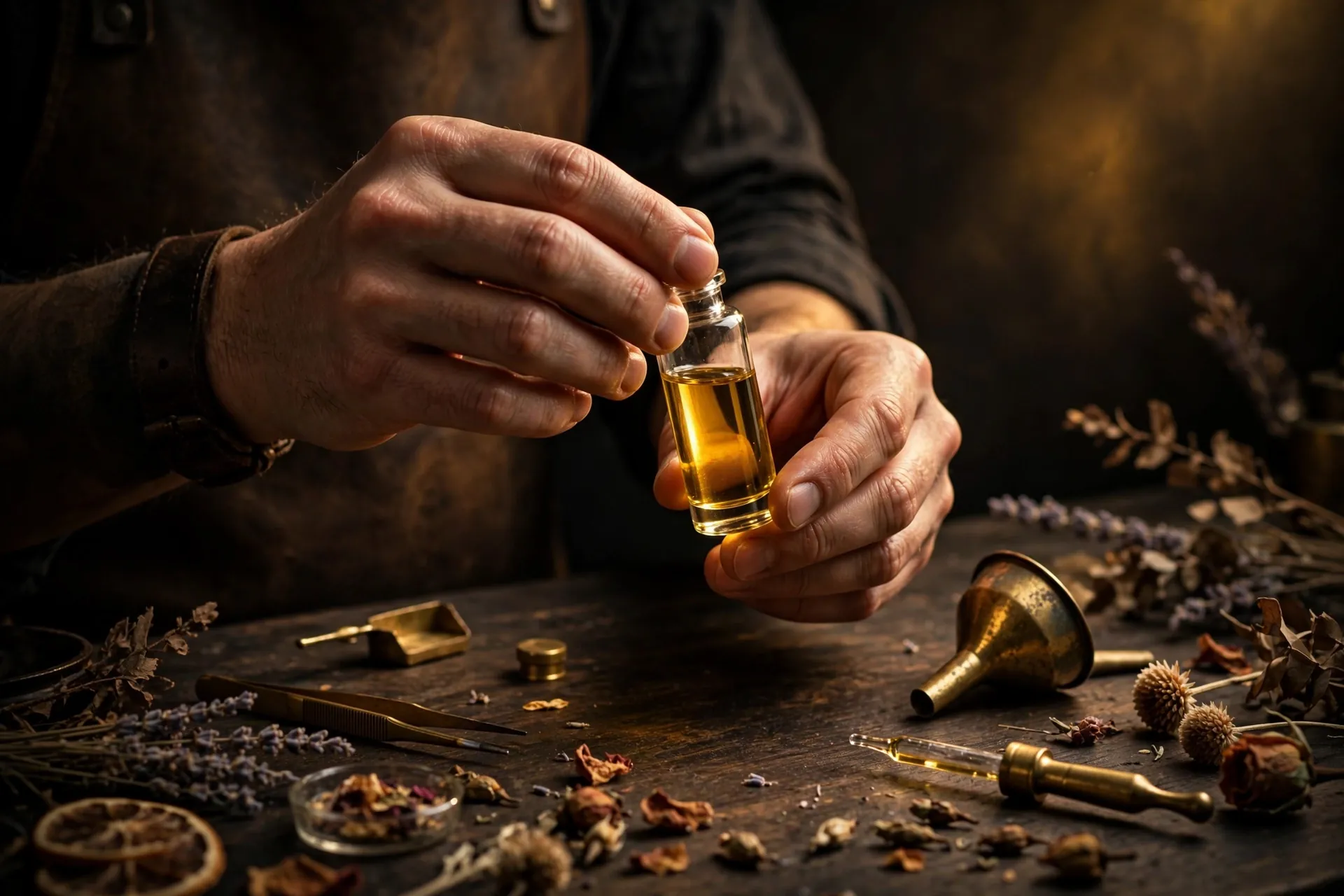
The journey from tree to vial is painstaking. Mature aquilaria wood — ideally decades old and rich with resin — is chipped, soaked, and steam-distilled for days in copper stills. The first hours yield the brightest, most volatile oils; later hours give deeper, darker fractions. Master distillers blend these fractions like a perfumer blends notes. One kilogram of good wood may yield only a few millilitres of oil — which is why a single tola of aged Hindi oud can cost more than a month's salary, and why it's worth every rupee to the connoisseur.
Oud in Pakistani Culture
Oud isn't just a fragrance here — it's a ritual. It's the scent of Jummah mornings, of Eid embraces, of wedding sherwanis and late-night mehfil conversations. Elders pass down their favourite attars like heirlooms; a man's oud collection is a quiet statement of taste. When you wear real oud in Pakistan, you're not following a trend — you're continuing a centuries-old conversation. That's why we treat our oud sourcing with something approaching reverence.
Storing Your Oud Oil
Pure oud oil is alive — it continues to mature in the vial. Store it upright, sealed, away from light and heat, and it will deepen and sweeten over years, like fine wine. Never refrigerate (condensation damages it), and never leave the vial open — oud oil is precious precisely because there's so little of it. A well-kept vial doesn't expire; it evolves.
Oud for Every Occasion: When to Wear Which
Hindi oud's bold, smoky presence belongs to winter evenings, weddings and formal gatherings — occasions where fragrance is part of the dress code. Cambodi's honeyed softness suits daily wear, office hours and daytime events, where you want depth without drama. For Jummah and Eid, Pakistan's classic oud moments, either works beautifully: a light swipe of Cambodi for the morning prayer, Hindi for the evening dawat. The guiding principle is simple — match the oud's intensity to the room's intimacy. When in doubt, under-apply: in a culture that knows oud intimately, restraint reads as confidence.
Starting Your Oud Wardrobe: A First-Timer's Path
You don't need a collector's vault on day one. Start with one wearable oud attar — an oud blended into a balanced composition — and wear it for a month across different occasions before deciding what you truly love. Next, add a small vial of pure dehn al oud to train your nose on the raw material; comparing it side by side with your attar teaches you what genuine oud smells like faster than any article ever could. Only then consider an aged Hindi oil. This measured path costs less than one impulsive luxury purchase — and it builds a wardrobe you will actually wear, not admire from the shelf.
The Aureon Oud Vault
Our oud collection is deliberately small: Royal Dehn al Oud — pure aged Hindi oud oil for the connoisseur — and attar compositions built around real oud, not "oud-type" fragrance. Every vial is batch-numbered and traceable to its distillation. Explore the Attars & Oud collection, or visit our boutiques where our oud bar lets you compare Hindi and Cambodi side by side before you commit a rupee.